
Read the French version: Sudbury : le bassin qui a bâti une nation minière
Watch the Video: English | French
Born in cosmic violence, discovered along a railway and built by generations of miners, metallurgists, entrepreneurs and immigrants, the Sudbury Basin helped turn Canada into a mining power. Nearly a century and a half later, its metals are taking on new importance in a world increasingly concerned with energy security, strategic supply chains and economic sovereignty.
Few mining camps on Earth compare with Sudbury’s origin story.
To understand it, you have to go back roughly 1.85 billion years, when a colossal extraterrestrial object struck what is now Northern Ontario. The impact melted and fractured the Earth’s crust on an almost unimaginable scale. Out of that catastrophe emerged the geological architecture of the Sudbury Igneous Complex and, eventually, one of the greatest concentrations of nickel, copper and platinum group metals ever exploited.
The U.S. Geological Survey places Sudbury alongside Russia’s Norilsk-Talnakh as the two giant nickel-copper sulphide districts that dominate the world’s nickel sulphide endowment, estimating that Sudbury contains about 19.8 million tonnes of nickel in its sulphide deposits.
Sudbury is not simply a great Canadian mining camp. It is one of the great mining camps of the world; its story is, in many respects, the story of Canadian mining itself.
The railway that found a mining camp
The mineral wealth around Sudbury did not entirely escape notice before the famous discovery of the 1880s.
In 1856, provincial land surveyor Albert Salter encountered strange deflections in his compass while surveying west of Lake Nipissing. Alexander Murray of the Geological Survey of Canada also investigated the area, but the country was remote and there were few immediate means of turning geological curiosity into an industry.
Then Canada began building a railway. The Canadian Pacific Railway was an act of nation-building, intended to bind a young and enormous country together. In Northern Ontario, its crews had to blast their way through some of the hardest rock on the continent and in 1883, one of those blasts changed mining history.
Thomas Flanagan, a blacksmith working with a CPR construction crew, noticed copper-bearing, rust-coloured rock in a freshly exposed railway cut northwest of present-day Sudbury. Alfred Selwyn, director of the Geological Survey of Canada, subsequently examined samples and recognized valuable mineralization. William and Thomas Murray, Henry Abbott and John Laughrin acquired the property that became the Murray Mine.
Prospectors poured into the district. Names including Thomas Frood and James Stobie became associated with new discoveries, and Copper Cliff, Creighton, Stobie and other deposits emerged from the bush.
The irony is that the metal that would make Sudbury famous was initially something of a problem. The early miners were looking for copper but they found nickel too.
From unwanted metal to strategic metal
The Canadian Copper Company (CCC) was formed in 1886 under American industrialist Samuel J. Ritchie, acquiring properties including Copper Cliff, Stobie and Creighton. Advances in processing eventually made it possible to efficiently separate the nickel contained in Sudbury’s ores.
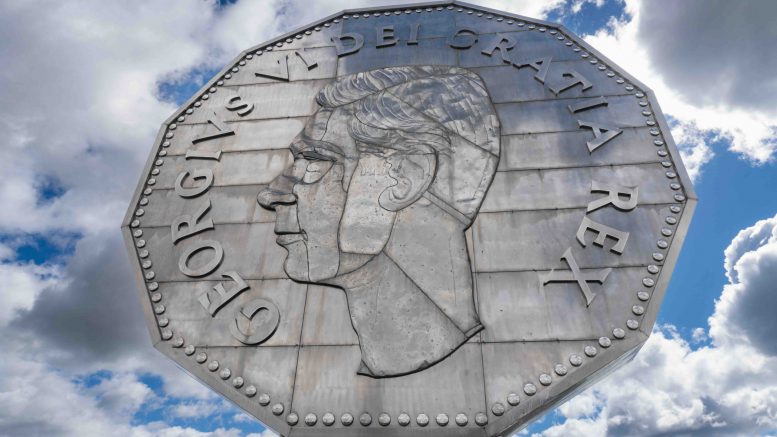
Then demand for nickel began to change. Nickel-steel alloys were exceptionally strong. Naval armour became an early major market. Construction, machinery and coinage followed.
Sudbury suddenly possessed not an inconvenient byproduct but one of the industrial world’s most valuable strategic materials.
By 1910, the Sudbury area was producing roughly 80% of the world’s nickel.
Inco: a Canadian mining colossus
If Sudbury created modern Canadian nickel mining, Inco carried it around the world.
The International Nickel Company was formed in 1902 through the combination of CCC’s operations and the Orford refining interests in the United States. In time, the company universally known as Inco became synonymous with Sudbury – and Sudbury with nickel.
Operations at Copper Cliff, Creighton, Frood and Stobie became industrial landmarks. Creighton developed into one of the world’s great nickel mines.
But Inco became much more than a mine operator.
It grew into one of Canada’s first genuinely global resource corporations, with world-class mining, smelting, refining, engineering and metallurgical expertise. Its researchers developed alloys and processing technologies. Its engineers learned how to mine deeper, hotter and more complex ore bodies. Generations of miners, geologists, metallurgists and executives trained in Sudbury carried Canadian expertise around the globe.
For much of the 20th century, Inco was not merely a nickel company, it was the nickel company, but it was soon to meet a worthy challenger.
Falconbridge: the great rival
Sudbury’s extraordinary story wasn’t solely Inco’s to take hold of.
Across the Basin another Canadian mining institution began to grow: Falconbridge Nickel Mines.
Its roots even included one of history’s most famous inventors. Thomas Edison prospected in the Sudbury district in 1901 and investigated mineralization in Falconbridge Township. Edison’s venture did not become the mine he envisioned, but subsequent drilling confirmed the orebody.
Thayer Lindsley, one of the formative figures in 20th-century Canadian mining, developed the claims, and Falconbridge Nickel Mines Limited was incorporated in 1928. A mine, company town, smelter and processing plant followed.
Falconbridge became Inco’s great hometown rival and that competition mattered.
Two sophisticated nickel companies operating in the same extraordinary geological district created an ecosystem of engineering, exploration and metallurgical innovation that few mining regions could match. Generations of locals grew up in households identified with one company or the other.
The companies competed underground, in exploration, in metallurgy and in world markets.
Together, they helped make Sudbury one of the intellectual capitals of hard-rock mining.
Noranda and the end of an era
If Inco and Falconbridge were inseparable from Sudbury, Noranda represented something broader: the emergence of the great Canadian mining house.
Founded in 1922 following Edmund Horne’s discoveries in Quebec’s Abitibi region, Noranda grew into one of Canada’s great diversified resource companies, spanning copper, zinc, nickel, aluminum and other commodities.
Over time, Noranda became Falconbridge’s controlling shareholder. In 2005, the companies formally came together, preserving the Falconbridge name. The combination created one of North America’s largest base-metal companies.
Then came a tantalizing possibility: Inco proposed acquiring Falconbridge.
Had it succeeded, Sudbury’s two historic rivals would have been united into a Canadian-headquartered nickel and copper champion.
Instead, 2006 marked the end of an era. Xstrata acquired Falconbridge, while Brazil’s CVRD — now Vale — acquired Inco. Seven years later, Xstrata merged with Glencore.
The mines remained. The smelters remained. The workers, engineers, suppliers and accumulated knowledge remained, but three names that embodied Canada’s emergence as a global mining power — Inco, Falconbridge and Noranda — had disappeared as independent Canadian mining companies.
Their loss still carries symbolism. These were not simply corporations headquartered in Canada. They were institutions built around Canadian ore bodies, Canadian engineering and Canadian mining communities. They financed exploration, developed technology and produced generations of mining leaders.
The metals that built the modern world
The scale of what has come from the Sudbury Basin is staggering. Over its history, the camp has yielded immense quantities of nickel and copper, along with cobalt, platinum, palladium, gold, silver and other metals.
But tonnage alone does not capture its importance. Sudbury nickel went into armour plating and military equipment when nickel-steel alloys became increasingly important to modern warfare. It went into stainless steel as cities and factories expanded, and into aircraft engines and high-temperature alloys.
Sudbury copper helped carry electricity through an increasingly electrified world and its platinum group metals found uses in catalysts, electronics, chemical processing and emissions-control technologies.
The economic contribution flowed back into Canada through wages, exports, investment, taxes, infrastructure and the creation of an entire mining-service economy.
That legacy continues. Canada’s minerals and metals sector directly employed about 438,000 people in 2024, while mineral exports reached $153 billion — 21% of all Canadian merchandise exports, according to Natural Resources Canada. It is no stretch to say that Sudbury helped create the industrial and technical foundation behind those numbers.
One of Earth’s great mining camps
Mining people sometimes use the term “world class” too easily. Sudbury, however, has earned the moniker.
More importantly, the Basin possesses the characteristic that distinguishes truly great mining camps: longevity.
A mining camp that remains economically significant after about 140 years requires something extra. It needs the elements of scale, geological complexity, infrastructure, technical innovation and repeated generations of discovery working together. Sudbury has all of them.
Miners followed the ore deeper. Geologists developed new models. Exploration moved beyond the obvious deposits into offset dykes and footwall systems. Technology made previously inaccessible deposits mineable.
Sudbury’s other great resource
Perhaps Sudbury’s greatest modern resource is no longer contained entirely in its rocks. It is contained in the people who learned how to mine them.
More than a century of difficult underground mining created a dense concentration of contractors, equipment manufacturers, engineering firms, laboratories, researchers, specialized post-secondary programs and mining technology companies.
Problems encountered kilometres underground produced solutions that could be sold around the world: ventilation, ground control, drilling, hoisting, communications, automation, mineral processing and deep-mine engineering.
Even the corporate lineage survives. Glencore’s present-day mining research and consulting operation traces its origins to the Falconbridge Technology Centre established in Sudbury in the 1940s, preserving decades of metallurgical knowledge.
That may be one of Sudbury’s greatest exports: not simply nickel, but know-how.
The next strategic age
Now history is turning back toward Sudbury. Nickel is strategic again and so is copper. As are cobalt and the platinum group metals that accompany some Sudbury ores.
Canada’s critical-minerals list contains 34 minerals and metals. Among the federal government’s highest priorities are nickel, copper and cobalt — precisely the family of metals around which Sudbury’s mining and metallurgical infrastructure was built.
The reasons are no longer primarily battleship armour and artillery, although those still matter, but added to those demand vectors are electric vehicles, batteries, electricity grids, renewable-energy systems, aerospace, electronics, advanced manufacturing and defence.
Critical minerals and Canadian sovereignty
The 21st-century contest over minerals is increasingly a contest over supply chains.
Governments have learned that possessing technology is not enough if the materials required to manufacture it come from jurisdictions that may be unreliable, strategically hostile or vulnerable to disruption.
Sudbury therefore has a significance that goes well beyond commodity prices.
Canada possesses something many allied economies want: an established, politically stable nickel-copper mining district with operating mines, processing infrastructure, transportation, engineering capability and a workforce that already knows how to build and operate complex underground mines.
Canada was the world’s fourth-largest nickel producer in 2024, with Ontario accounting for roughly 40% of Canadian production.
That production is not merely an export opportunity; it is strategic leverage.
Canadian nickel and copper can supply North American and allied manufacturing while reducing dependence on geopolitical competitors. Domestic smelting and refining can retain more of the value chain at home. New discoveries can support future battery, defence and advanced-manufacturing supply chains.
In that sense, mining has again become part of sovereignty and Sudbury has been practising mineral sovereignty since before the term existed.
The next generation
The most remarkable thing about Sudbury may ultimately be that its story is unfinished.
Thomas Flanagan could not have imagined lithium-ion batteries when he examined that rusty railway cut in 1883. Samuel Ritchie could not have imagined electric vehicles.
The founders of Inco weren’t thinking about autonomous underground equipment and Thayer Lindsley could not have imagined artificial intelligence helping geologists search for deposits kilometres beneath the surface.
And the generations who built Inco, Falconbridge and Noranda could not have foreseen governments once again discussing nickel, copper and cobalt in the language of national security.
Yet every one of those futures traces back to the same extraordinary geological event.
So while the corporate flags over Sudbury have changed, Vale and Glencore carry forward much of the operating legacy from the former Canadian corporate giants.
It is there in the shafts beneath the Basin, in the processing infrastructure, in the exploration targets still being drilled, in the mining suppliers and laboratories, and above all in a community that has spent nearly a century and a half learning how to extract extraordinary value from extraordinarily difficult rock.
For much of the 20th century, Sudbury helped supply the metals that industrialized the world.
In the 21st, it can help supply the metals needed to electrify and secure it — while giving Canada something increasingly precious: resources of its own, the expertise to develop them and the ability to turn mineral wealth into Canadian jobs, economic strength and strategic independence. That is why the Sudbury Basin belongs among the greatest treasures in Canadian mining. ….and after 140 years, Canada may need it more than ever.
This campaign is proudly presented with the support of industry sponsors including Agnico Eagle Mines, Sprott Money, EarthLabs, Iamgold, Kinross Gold, The World Gold Council, Alamos Gold, Ernst & Young, MINING.COM, CEO.CA and The Canadian Mining Journal.
For more information, including full contest rules, FAQs and updates, visit treasure.northernminer.com.Follow @northernminer (X/FB/YouTube) | @thenorthernminer (IG) | @mining (X) | @miningdotcom (IG/FB/YouTube) | @ceodotca (X/IG/FB/TikTok) | @ceocafilm (YouTube) for ongoing clues and community updates.


Be the first to comment on "Treasure hunt – Sudbury: The Basin That Built a Mining Nation"