
Rainbow Rare Earths (LSE: RBW) has selected Neo Performance Materials (TSX: NEO) to help design the final separation circuit at its Phalaborwa rare earths project in South Africa, clearing the way for a prefeasibility study in the fourth quarter.
Under a memorandum of understanding, Toronto-based Neo would receive offtake rights to 40% of Phalaborwa’s annual production of separated neodymium-praseodymium (NdPr) oxide and 65% of its mixed SEG+ heavy rare earth carbonate, the company said Thursday. Pricing would be based on relevant rare earth indices under arm’s-length commercial terms.
“Because the material is already at the surface and requires no new mining, the project has the potential for a lower development risk profile,” Neo CEO Rahim Suleman said in a release.
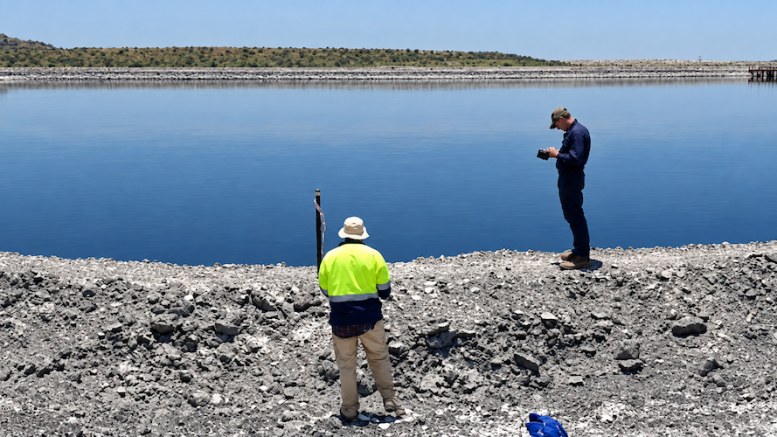
Phalaborwa would recover rare earths from legacy phosphogypsum stacks left by fertilizer production rather than mine fresh ore. The project hosts a 35-million-tonne resource grading 0.44% total rare earth oxides, with the material already chemically cracked and sitting at surface.
Processing route
Neo will provide technology, design input and technical support for Rainbow’s final solvent-extraction circuit. Test work using Phalaborwa material is underway at Neo’s facilities in Estonia and is to be followed by an integrated pilot-scale campaign in Johannesburg.
Selecting Neo resolves what Rainbow described as the remaining step needed to define the process for recovering and separating rare earths from the phosphogypsum. Because the material has already been mined and chemically treated, the proposed operation would avoid mining, hauling, crushing, grinding and conventional cracking required by many hard-rock rare earth projects.
Rainbow expects the prefeasibility study to define final products, the processing route and waste streams in enough detail to advance financing and permitting. A definitive feasibility study is planned for the first half of 2027.
The SEG+ product includes samarium, europium and gadolinium as well as the magnet rare earths dysprosium and terbium. Neo and Rainbow are also considering toll treating the remaining 35% of Phalaborwa’s SEG+ production at Neo’s facilities.
Under that arrangement, separated dysprosium, terbium and yttrium would be returned to Rainbow to market independently.
The memorandum remains subject to binding long-form agreements, which the companies have begun negotiating.
European link
Neo operates commercial light and heavy rare earth separation capacity in Estonia, where it also has a sintered magnet manufacturing facility. The company began producing heavy rare earths at its Silmet plant earlier this year after commissioning a new solvent-extraction line.
Its magnet operation in Narva, which opened in 2025, gives the Phalaborwa agreement a potential route from African feedstock through European separation to magnet manufacturing.
The arrangement comes as Western governments and manufacturers try to develop rare earth supply chains outside China, which dominates global processing and magnet production. Phalaborwa would add a potential African source of both light and heavy magnet rare earths without requiring a new mine.
Rainbow is pursuing a similar phosphogypsum strategy in Brazil. The company and Mosaic (NYSE: MOS) agreed this year to advance the Uberaba project, which would also recover rare earths from fertilizer waste.
Phalaborwa’s development schedule has nevertheless slipped from earlier targets. Rainbow now expects the definitive feasibility study in the first half of 2027, while permitting, financing and definitive agreements with Neo would still be required before construction.
A December 2024 interim economic study put initial capital at $326.1 million (C$461 million), after-tax net present value at $610.9 million and the internal rate of return at 38%. The study envisaged processing 2.2 million tonnes of phosphogypsum annually over 16 years.
The upcoming prefeasibility study is expected to provide the first updated assessment of Phalaborwa’s economics since Rainbow changed its planned final product mix to separated NdPr oxide and the SEG+ carbonate.
Be the first to comment on "Rainbow taps Neo to advance South African rare earths"