
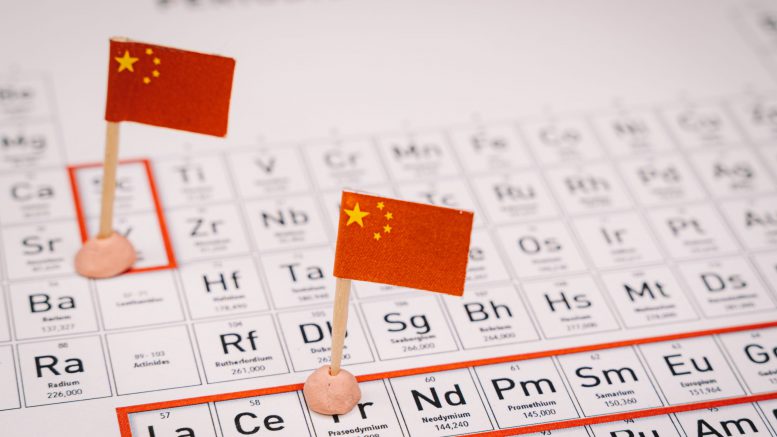
China has doubled down on its months-long restriction on exports of rare earth products to Japan despite reports of the U.S. asking Beijing to lift the measures.
In January, China’s Ministry of Commerce announced an export ban on dual-use items – including those made with rare earth elements – that have civilian and military use, after tensions escalated between the two Asian powerhouses from their respective stances on Taiwan. Beijing was also considering curbs on export permits for some rare earth-related products.
On Tuesday, the Chinese government reaffirmed that the export ban remains in place, with Spokesperson of the Ministry of Foreign Affairs Lin Jian reiterating that rare earths remain classified as “dual-use materials” under Chinese laws that prohibit their export to the Japanese government for military purposes.
Beijing’s export controls on rare earths-containing dual-use technologies exposed Japan’s dependence on China for the important elements, whose supply and processing China dominates. In March, a deal between Australia’s Lynas Rare Earths (ASX: LYC; US-OTC: LYSDY) and Japanese customer JARE confirmed heavy rare earth supplies and created a price floor as a hedge against China. Japan has also ramped up efforts to form rare earth partnerships with its Group of Seven peers.
China’s fluctuating exports
While it has restricted shipments to Japan, China’s rare earth exports have been seen rising in recent months, with the latest customs data showing exports reaching a fourth-month high in May. Still, the export figures remain down compared to this time last year.
Lin’s statement came as he was asked by Bloomberg about an earlier report in Nikkei claiming that the U.S. government had asked China to allow the resumption of rare earth metal sales to Japan due to concerns over the global supply chain impacted by Japan’s technology sector. In addition to containing remilitarization, the move was also aimed at slowing Japan’s attempt to possess nuclear weapons, Lin also said.
Past export curbs
China’s export restrictions echo a similar move by Beijing in 2010, when it sharply cut rare earth shipments to Japan following a territorial dispute over the Senkaku Islands.
Though the ban only lasted about two months, it alerted Japan to its reliance on China for the critical minerals and spurred it to seek other suppliers.
In 2011, Japanese conglomerate Sojitz and government mineral agency Jogmec made a $250 million deal with Lynas Rare Earths for long-term supply of the elements. Lynas holds the Mount Weld mine in Western Australia and is the largest producer of rare earths outside of China. Lynas processes the elements at a facility in Malaysia.
The Lynas deal and other supply chain arrangements have helped Japan reduce its reliance on Chinese rare earths to 60-70% today from 90% in 2010, according to Jogmec data cited by The New York Times.
Be the first to comment on "China stands by Japan rare earth export restrictions"