
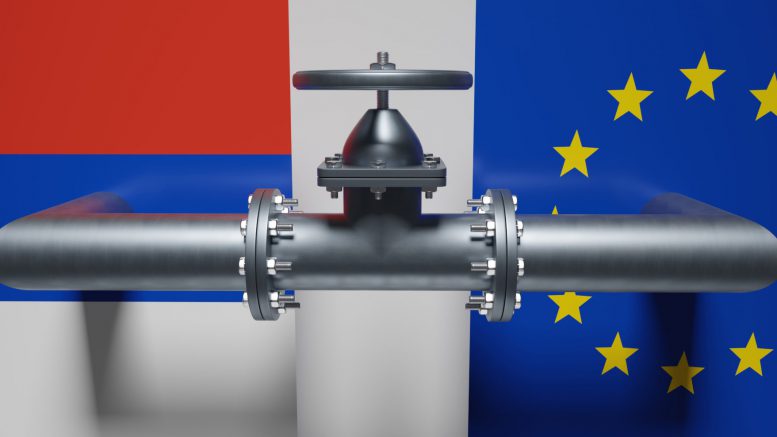
What does Europe, a continent starved for commodities, do when it faces future shortages of critical minerals and energy?
According to European Commission President Ursula von der Leyen, the decision is straightforward: Make things even harder!
“It is time to turn off the tap” on Russian LNG, she said last September, when the European Union made the critical (perhaps fateful) decision to cut off LNG imports into Europe one year earlier than planned.
By taking this bold decision, EU leaders believed they would cut off “Russia’s war economy.”
Will it stop Russia?
Within days of the announcement, Russia secured a new buyer for its vast natural gas reserves, a long-term deal with China that includes 50 billion cubic metres of gas being exported each year from Russia’s remote Siberian frontier.
The mechanics of the deal are straightforward: more energy for China, and substantial financial benefits for Russia. The new gas pipeline, Power of Siberia 2, is estimated to contribute up to 36% of China’s total gas imports. This will thrust Russia into becoming China’s most important energy supplier.
But for energy-deprived Europe, a crucial cutoff date is now approaching, and even faster than before. Kaja Kallas, the EU’s foreign policy chief, said that the new proposal aimed “to speed up the phase-out of Russian liquefied natural gas.”
But is this merely hastening Europe’s energy poverty? This could have a broader impact on global markets.
60 years of supply
For over half a century, Russia has consistently supplied Europe with abundant natural gas. And that was despite decades of tense Cold War frictions.
Russia’s vast natural resources have been a gift for Western Europe. Initially, it helped to stabilize shattered European nations following the devastation of the Second World War.
However, it also fuelled Western Europe’s economic advantages in the years that followed, making it the world’s premier hub for high-end manufacturing. Cheap, reliable gas from Russia was the seed that sowed Europe’s post-war growth and today’s high standards of living.
European countries often rank among the highest in average salaries worldwide. Many countries across the continent also lead the world in public education and healthcare.
All about cheap energy
Whether they understand it or not, that’s what EU leaders are putting at stake as they “turn off the tap.” It’s part of the reason the oil and gas market remains vulnerable, despite International Energy Agency projections indicating global production will remain in surplus throughout 2026.
However, that’s only part of the equation, when you consider that the world’s three largest producers, the U.S., Saudi Arabia, and Russia, make up almost half of total global production.
Now, what happens if these energy superpowers begin to align and form a much more dominant OPEC-like alliance? Far-fetched? Well, 2026 is already proving to be an extraordinary year that requires investors to think outside the box. And that might mean re-considering consensus views that oil and gas prices will remain depressed.
Forget precious metals or critical mineral stocks; oil and gas could emerge as the true hedge against geopolitical risk in the months to come.
James Cooper is a geologist based in Australia who runs the commodities investment service Diggers and Drillers. You can also follow him on X @JCooperGeo.




Be the first to comment on "Opinion: Will energy eclipse critical metals as a hedge?"