
Niger is struggling to find a buyer for a large stockpile of nationalized uranium while trying to keep it out of militant hands after a recent attack narrowly missed the material.
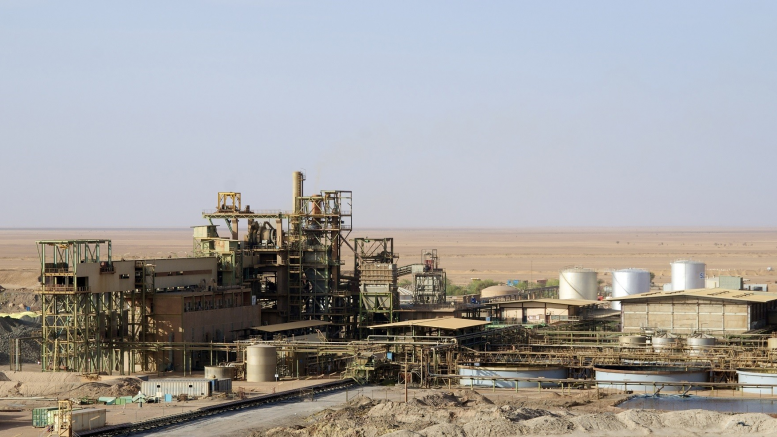
The military-led government has moved an estimated 1,000 tonnes of uranium concentrate, or yellowcake, to a military air base near the capital, Niamey, the Financial Times reported earlier this month. It remains unsold following the late 2024 seizure of Somaïr, a mine previously operated by France’s Orano.
The situation has raised alarm among security analysts as Islamist militants expand operations across the Sahel. Fighters linked to Islamic State, for the first time ever in a clear sign of growing capability, attacked Niamey’s airport Jan. 28 and came within striking distance of the air base where the uranium is stored. International court action by Orano over Somaïr has complicated any yellowcake sale.
“It is likely that the junta is facing challenges to find a buyer for the stocks, given ongoing legal proceedings including arbitration cases,” Tristan Gueret-Thompson, a West Africa analyst at Johannesburg-based Control Risks, said by email. “This may be motivating the authorities to settle the dispute with France to facilitate future exports.”
Arbitration
An arbitration tribunal has ruled that uranium from the operation must not be sold or transferred to third parties without Orano’s consent, limiting Niger’s ability to market the material freely.
In a potential sign of easing tensions, Niger’s President Abdourahamane Tiani said Feb. 13 that the government was prepared to return 95,000 tonnes of yellowcake produced at Somaïr to Orano. The amount represents the roughly 63% of output equal to the company’s previous ownership stake in the mine.
The junta’s decision to seize uranium assets is part of a wider pattern across the Sahel, where military governments in Niger, Mali and Burkina Faso have rewritten mining codes, increased state ownership and, in some cases, taken direct control of projects. But high commodity prices, particularly for gold, and the need for foreign investment are pushing governments to balance resource nationalism with economic realities in some of the world’s poorest countries.
Easing tensions?
In Mali, authorities recently reached a settlement with Barrick Mining (TSX: ABX; NYSE: GOLD) that allows operations at the Loulo-Gounkoto complex to resume after a prolonged dispute, while Burkina Faso has softened its stance toward foreign operators after earlier threats to revoke licences.
“A settlement over the yellowcake would be part of a broader trend of a slight easing of tensions between mining operators and the Sahelian juntas over the past few months, even if those remain under pressure,” Gueret-Thompson said.
“On the security front, all three countries are facing severe challenges and there are no indications that they are having more success at countering Islamist militants than their civilian predecessors.”
Be the first to comment on "Niger junta seeks uranium buyer"