
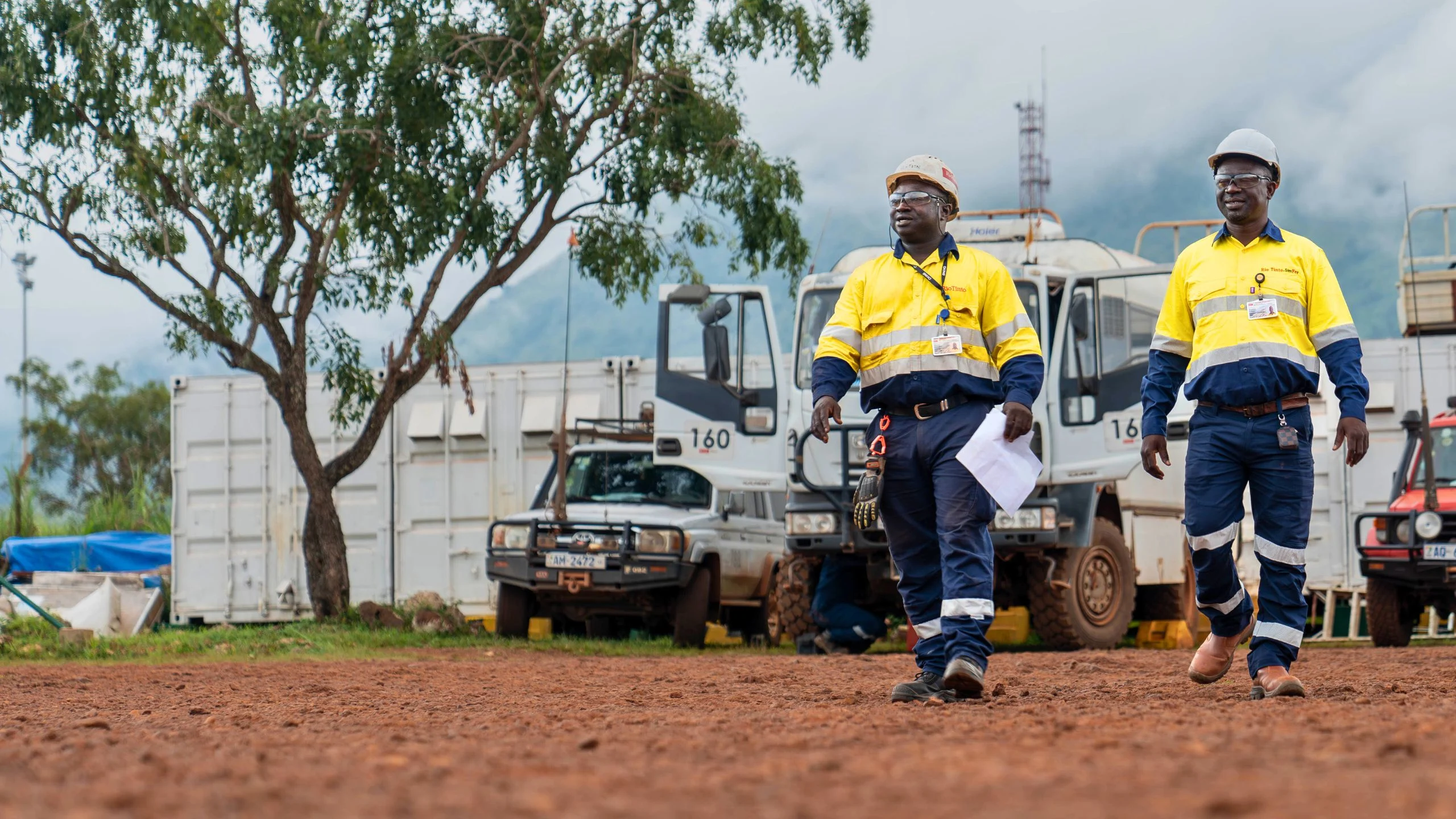
CAPE TOWN — Rio Tinto (ASX, LSE, NYSE: RIO) is on track to increase high-grade iron ore production from Guinea’s long-delayed Simandou, Africa’s biggest mining and infrastructure project, to more than 30 million tonnes per year, a senior executive told delegates at the Mining Indaba.
Commissioning of the common rail-to-port system is underway and expected to conclude around the end of the first quarter. The project includes two separate mines in southeastern Guinea linked by more than 600 km of railway featuring four tunnels and over 200 bridges, as well as a new port using transshipment vessels to move ore to ocean-going ships.
“There is still much work to be done, first to complete common infrastructure commissioning, and then to finish the mine construction to enable ramp up to our full capacity of 60 million tonnes per year,” Chris Aitchison, managing director of Rio Tinto Simfer, the company’s Guinean iron ore venture, said in opening-day remarks. “But I’m proud to say that just over 18 months after major construction began, we can now call ourselves a mining business.”
Simandou, which will catapult Guinea into the third-largest iron ore exporter spot, is expected to reshape seaborne supply once fully ramped up. The ore averages more than 65% iron with low impurities, making Simandou one of the world’s biggest high-grade deposits and complements the West African country’s existing position as a top bauxite producer. The project allows the steel industry new options to decarbonize and gives Guinea the chance to expand economic output by up to 55%.
Different blocks
Simandou’s blocks three and four are held through SimFer, owned 53% by Rio Tinto and 47% by Chalco Iron Ore Holdings, a consortium backed by Aluminum Corp. of China (Chinalco). Blocks one and two are controlled by Winning Consortium Simandou, which includes Singapore’s Winning International Group, China Hongqiao’s Weiqiao Aluminium and China Baowu Steel Group.
The project’s shared rail and port infrastructure is owned by Compagnie du TransGuinéen (CTG), in which the Government of Guinea holds a 15% stake, with the remaining interest held by the mining partners.
Since its discovery about 30 years ago, the deposit has been mired in development delays and ownership disputes. Aitchison credited a new co-development model between Rio, Chinese-backed partners and the Government of Guinea for accelerating execution.
“What made this possible was a shared vision between Rio Tinto, our partners in SimFer, and most importantly, the government and people of Guinea,” he said. “It is unlikely that a single company has the ability, capability, the resources, in the capital environment, to be able to execute something of this by itself.”
Big employer
The project has mobilized as many as 60,000 people drawn from more than 40 countries, including more than 29,000 people on Rio’s scope alone. The company has spent more than $840 million with Guinean suppliers, with over 900 local firms involved in construction, logistics and services.
The workforce is already more than 80% Guinean and is expected to increase during operations, supported by a training centre and three-year apprenticeship program for more than 200 young people from local communities.
Aitchison credited the Guinean government with accelerating approvals by establishing a project management office to coordinate ministries and streamline permitting. He said the government had articulated a consistent vision that infrastructure built for the mines must outlive the operation and serve the broader economy.
Rio Tinto has operated in Africa for much of its 150-year history and today has a footprint spanning nine countries, employing more than 25,000 people. Its Richards Bay Minerals operation in South Africa recently marked 50 years of production, while its QMM mineral sands mine in Madagascar is advancing renewable energy projects intended to power operations and supply electricity to surrounding communities.
Be the first to comment on "Indaba: Rio ramps up Simandou iron ore output"