

The price of cobalt sulphate entering the electric vehicle battery supply chain in China has soared more than 90% since the start of the year after top producer the Democratic Republic of Congo slapped a ban on exports in February.
The price averaged $6,947 a tonne in August, though still nowhere near the 2022 peak of $19,000 per tonne. Cobalt prices had sunk to historic lows at the start of this year after a surge in supply from the DRC, responsible for 80% of the world’s cobalt output, coupled with tepid demand from the electric vehicle market.
Copper production in the DRC, with a big chunk owned by Chinese companies, was rising fast – leading to a near 40% jump in the country’s co-product cobalt output in 2024. The central African country in June this year extended the ban for three months. It’s due to end around Sept. 21.
Analysts expect that rather than returning to unrestricted exports, the DRC will move toward limiting volumes in a controlled way using a quota system. Key issues will include which miners get how much, and how enforcement works.
Back to life
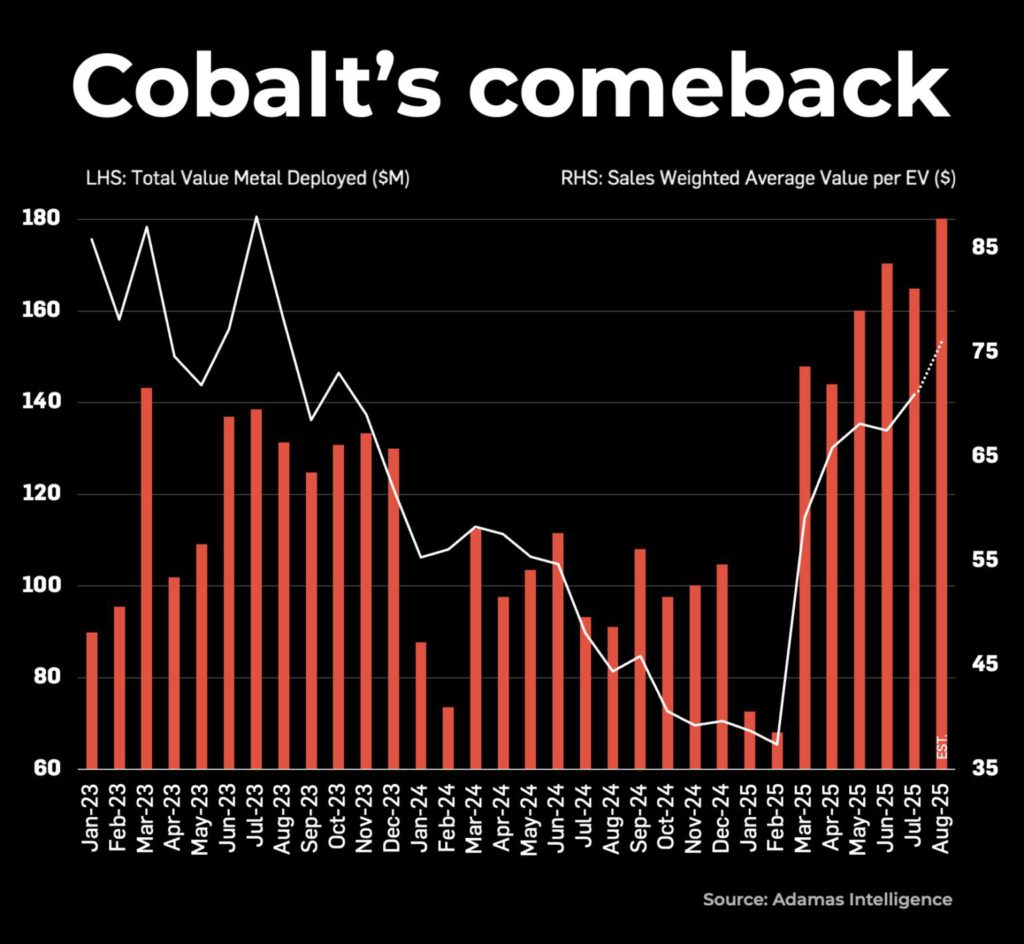
Cobalt consumption in EV batteries overtook other sources of demand like aerospace several years ago and the impact of the DRC strategy has been swift. The latest data from Toronto-based research consultants Adamas Intelligence tracking EV battery metal deployment in over 120 countries paired with monthly prices shows the cobalt market springing back to life.
The size of the battery cobalt market in August totalled an estimated $180.1 million, the highest since December 2022, lifting the value of sales weighted average cobalt contained in tandem. The average value of the cobalt contained in EV batteries is back up above $70 per vehicle, up from less than $40 at the start of the year.
In total, installed tonnage of nickel, cobalt and manganese now represents more than half the value of the battery metal basket that came to $1.28 billion in August. That’s despite the accelerating adoption of LFP (lithium iron phosphate) battery chemistries over NCM (nickel-cobalt-manganese).
Cobalt use is also being impacted by the move towards high nickel cathodes with chemistries with less than 10% cobalt content now dominant globally.
The value of terminal nickel, cobalt and manganese tonnes deployed in EVs, including plug-in and conventional hybrids, sold around the world from January through August this year totalled $4.93 billion.
Keeping in mind that the installed tonnage does not take into account any losses during processing, chemical conversion or battery production scrap (often well into double-digit percentages), so required tonnes and revenues are meaningfully higher at the mine mouth.
DRC output
Output in the DRC from CMOC, the world’s top producer of cobalt, has been rising while number two producer Glencore warned last month that a significant portion of its cobalt output may remain unsold by the end of 2025
The impact on the market and pricing – should Kinshasa ease restrictions – and when the stockpiled cobalt begins to re-enter the supply chain, remains to be seen.
The U.S. Defense Department is not waiting for that eventuality, however, and has issued a tender (the first time since 1990) for the supply of 7,500 tonnes over five years.
Helpful, but nowhere near enough to mop up supply should Congo decide to reopen the floodgates.
For a fuller analysis of the EV battery metals market check out the October issue of The Northern Miner print and digital editions.
* Frik Els is Editor at Large for MINING.COM and Head of Adamas Inside, providing news and analysis based on Adamas Intelligence data.
Be the first to comment on "Congo strategy nearly doubles cobalt price "