
VANCOUVER — Nanika Resources( NKA-V) is forming a joint-venture company with South Korean partners Palm Clean Energy and Daewon Chemicals for its Lucky Ship molybdenum property in central B. C.
The JV company follows an option agreement signed with Palm Clean in 2006. Daewon came on as a second partner in June 2007 by acquiring part of Palm Clean’s interest in the option.
The JV will initially be 60-40 in favour of Nanika (previously known as New Cantech Ventures before May 2008).
Finishing off a total $5 million in a series of payments made to Nanika from the South Korean partners since 2006, Nanika will receive $500,000 in two payments over the next six months.
Daewon and Palm Clean can boost their stake to 51% over the next two years if they fund all costs related to producing a bankable feasibility study.
The South Korean partners can bump that up to 60% by financing the project to production. If they cannot source the necessary funds to commission the project, their stake would drop to 42%, with Nanika holding the balance.
Nanika president and CEO James Jacuta sees the continued involvement of the South Korean partners after molybdenum’s price crash late last year as a vote of confidence in the project.
“It’s the good news in the story,” he says.
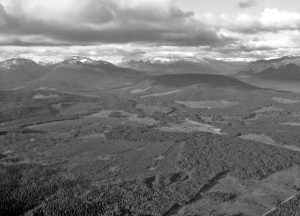
The Lucky Ship project, 85 km southwest of Houston, B. C., is one of many porphyries explored in the province during the 1960s that subsequently slipped into oblivion following deterioration of metal prices.
Based on about 20,000 metres of drilling, half of which Nanika completed, last summer the company estimated Lucky Ship’s indicated resource at 66 million tonnes grading 0.064% moly.
Jacuta says Nanika and its South Korean partners will be sitting down soon to discuss how quickly to advance the Lucky Ship project.
He says it is likely that at the very least, the JV partners will continue baseline environmental data collection, consultations with First Nations and begin environmental permitting.
On news of formation of the JV company, Nanika’s share price gained 2¢ to close at 6¢. It has 65.1 million shares outstanding.
Nanika started 2009 with around $300,000 in cash and equivalents.
Be the first to comment on "South Koreans Stick With Nanika On BC Moly Project"