
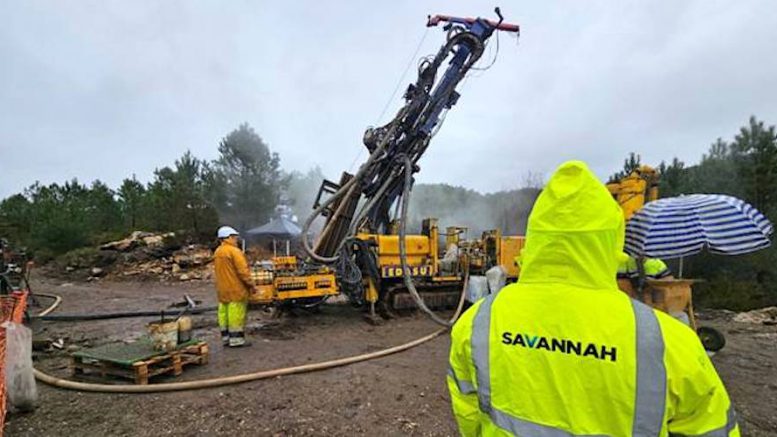
Savannah Resources (LSE: SAV) is closing in on full ownership of a high-grade lithium lease at its Barroso project in northern Portugal after a €3.25-million (US$3.8-million) acquisition.
The company added the Aldeia lease, which sits next to its C-100 concession and hosts a JORC-compliant resource of 3.5 million tonnes grading 1.3% lithium oxide on Block A. That’s about 11% of Barroso’s global resource and adds exploration upside across three blocks. Savannah plans to include the indicated resource in an imminent definitive feasibility study.
Barroso, scheduled for a 2028 start, hosts more than 39 million tonnes of high-grade spodumene, a hard-rock form of lithium. Savannah plans to develop four open-pit mines capable of producing enough lithium each year to supply batteries for about 500,000 electric vehicles. The European Union earlier this year designated Barroso a strategic project, a status Savannah expects will unlock funding support.
Completing the transfer marked an important milestone ahead of year end, with formal state approval now pending, CEO Emanuel Proença said.
Shares in Savannah Resources slid 3.9% on Friday afternoon in London to 3.7 pence apiece, valuing the company at £95.2 million (US$127 million).
Study
Savannah said it aims to complete its definitive feasibility study and environmental licensing by the end of this year and has rejected media reports citing a United Nations committee that accused Portuguese authorities of breaching international law during the approval process.
Once operational, the project is forecast to process 1.5 million tonnes a year over an estimated 14-year mine life, based on a resource of 20.5 million tonnes grading 1.05% lithium oxide.
Proença has said Barroso could ultimately command a valuation of about €1 billion (US$1.2 billion). The project can break even at lithium prices of $600 a tonne, he said. The company is vying to compete with larger producers while offering European customers shorter, more secure supply chains.
Financing
The acquisition was funded partly through a recent oversubscribed equity raise and structured as staged payments to Portugal’s Directorate General for Energy and Geology.
Despite its strategic importance, the project faces opposition from local communities and environmental groups. The Barroso region has been recognized as a World Heritage agricultural site since 2018, prompting concerns about land use, water and biodiversity.
Portugal has mined lithium for ceramics for decades but has yet to produce battery-grade material at scale.
Be the first to comment on "Savannah increases Barroso lithium stake"