
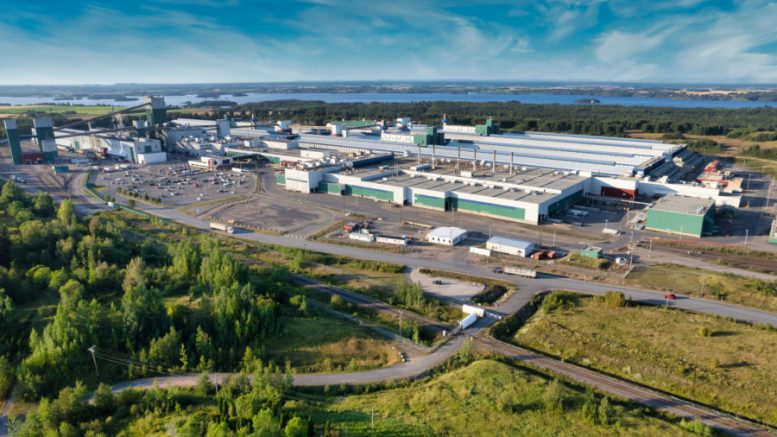
Rio Tinto (ASX: RIO) is investing $1.7 billion (US$1.22 billion) to modernize its Isle-Maligne hydroelectric power plant in Quebec, first commissioned in 1926, to make aluminum production more efficient.
The project 480 km north of Montreal is Rio Tinto’s largest single investment in its hydroelectric assets since the 1950s, the world’s second-largest miner by market capitalization said this month.
Isle-Maligne is one of six hydroelectric stations totaling 3,300 megawatts (MW) that Rio Tinto operates in the Saguenay–Lac-Saint-Jean region to power smelters producing about 1.37 million tonnes a year of aluminum.
The modernization project is to run until 2032, with more than 300 people working on the site at its peak. It includes replacing eight turbine-alternator groups, rehabilitating their water intake and hydraulic passage, building an extension and mechanical workshop to the north of the power station, replacing electrical and mechanical equipment, and modifying a spillway so that it can be used reliably in winter.
Low-carbon
“This major investment to modernize our facilities will ensure the long-term future and competitiveness of our low carbon aluminium production in Quebec for decades to come for our Canadian and American customers,’’ Rio Tinto Aluminium’s managing director for Atlantic operations, Sébastien Ross, said in a news release.
“The Isle-Maligne hydroelectric power plant has been a strategic asset for Rio Tinto for 100 years, drawing on the expertise and dedication of multiple generations of employees and business partners.”
The plant was among the most powerful hydroelectric stations globally at the time of its commissioning, although its current installed capacity of around 436 MW isn’t among the 50 largest in Canada. It wasn’t immediately clear if the project will add MW.
This investment is in addition to a previously announced $252 million to refurbish butterfly valves and work on two other turbine-alternator groups at the power plant.
The plant was constructed between 1923 and 1925. The dam is a concrete gravity structure, measuring about 540 metres long and 44 metres high. It spans the Grande Décharge River, the primary outflow of Lac Saint-Jean, creating a reservoir that supports the plant’s hydroelectric generation capabilities.
Be the first to comment on "Rio’s $1.7B upgrades century-old Quebec hydro dam"