
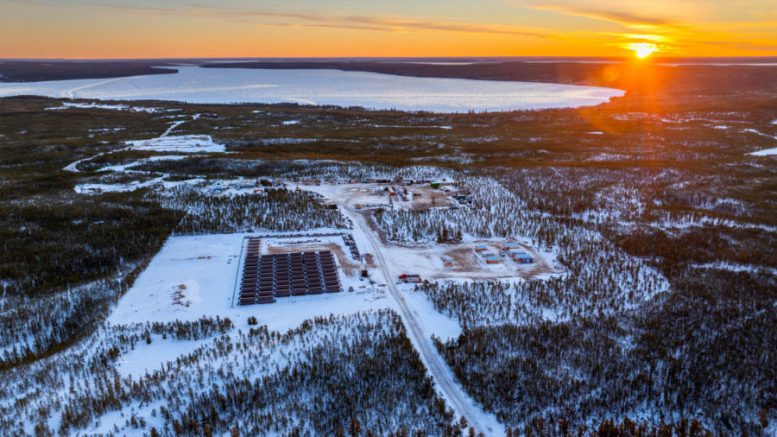
Australia’s Paladin Energy (ASX, TSX: PDN) expects making a final investment decision on its Patterson Lake South (PLS) uranium project in Saskatchewan by the end of 2027 as the company pushes the high-grade Triple R deposit through front-end engineering and design (FEED) and permitting.
PLS has become Paladin’s clearest shot at adding a second uranium mine and diversify production from the Langer Heinrich uranium mine in Namibia which is ramping up after years standing idle. After securing provincial environmental approval for PLS in February, the Canadian Nuclear Safety Commission’s construction-licence process remains pending. Paladin said the FEED study is due later this year as drilling continues at Triple R and the nearby Saloon East trend.
“There’s been a lack of exploration over the last 10 years,” CEO Paul Hemburrow told The Northern Miner in an interview. “Mines are being depleted and so, the supply-demand gap is continuing to open up.”
With 438 nuclear power reactors operating globally and 79 under construction, advanced uranium projects in established jurisdictions are drawing renewed attention. Paladin’s peers include NexGen Energy’s (TSX, NYSE: NXE; ASX: NXG) permitted Rook I project in the western Athabasca and Denison Mines’ (TSX: DML) construction-stage Phoenix project at Wheeler River, while African developers such as Global Atomic (TSX: GLO; US-OTC: GLATF), Global Atomic (TSX: GLO; US-OTC: GLATF), Deep Yellow (ASX: DYL) and Bannerman Energy (ASX: BMN) compete more broadly for the same uranium-cycle capital and contracting window.
Challenge
There is, however, a legal wrinkle. On March 31, Paladin disclosed that Métis Nation–Saskatchewan had applied for judicial review in the Saskatchewan Court of King’s Bench to challenge the Feb. 19 environmental approval, alleging inadequate consultation.
Paladin said it denies the claims and intends to defend its position.
Paladin, which bought Fission Uranium in Dec. 2024, has secured an exemption from Canada’s non-resident ownership policy for the project, signed mutual benefits agreements with the Buffalo River Dene Nation and Clearwater River Dene Nation and completed an engineering review, culminating in approval of the provincial environmental impact assessment now challenged.
Location, location
Paladin’s own benchmarking places PLS in the top rank of undeveloped uranium projects on grade and cost, and the project’s Athabasca location. Shallow geometry and exposure to market-related pricing also contribute to strong project economics.
“Not many advanced uranium projects of this size, grade and jurisdictional quality are close enough to permitting to matter now,” Hemburrow said.
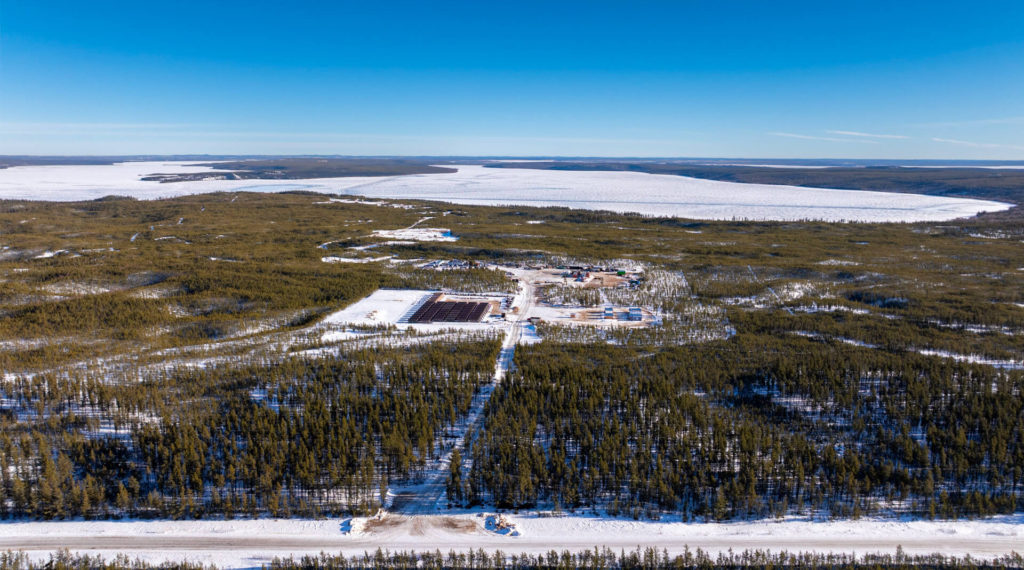
What makes the western Athabasca matter is the Patterson Lake corridor: a structurally fertile belt where recent discoveries such as Triple R and Arrow showed that Saskatchewan can host shallow, basement-hosted, high-grade uranium deposits outside the basin’s traditional eastern stronghold.
PLS carries about 93.7 million lb. uranium oxide in probable reserves grading 1.41%, starting just 50 metres from surface, with average annual production targeted at 9.1 million lb. over an initial 10-year mine life.
A Jan. 2023 feasibility study puts the pre-production capital at $1.2 billion (C$1.7 billion), life-of-mine operating cash cost at $11.7 per lb., all-in sustaining cost at $15.2 per lb. and first uranium in 2031.
Growing resource
Paladin is also trying to grow PLS beyond its initial 10-year mine life through drilling at Triple R and the broader project area.
Current work is focused on extending Triple R mineralization along trend, converting 25.1 million lb. U3O8 indicated resources and 10.9 million lb. of inferred resources into reserves and the mine plan, and following up on significant radioactivity intersected last year at the Saloon East zone.
Be the first to comment on "Paladin targets 2027 uranium decision on Patterson Lake South"