
Canada, Quebec and Newfoundland and Labrador signed a $10 billion (US$7.2 billion) non-binding agreement to expand the Churchill Falls generating station, nearly tripling its current capacity, in what Ottawa is calling the largest clean energy investment in North American history.
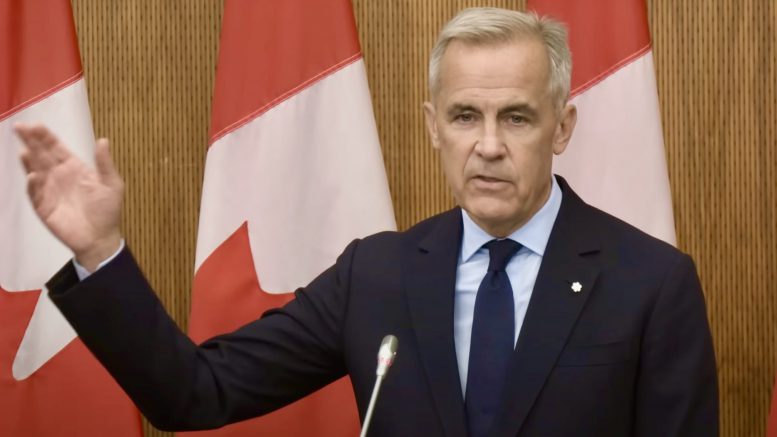
Prime Minister Mark Carney, Newfoundland and Labrador Premier Tony Wakeham and Quebec Premier Christine Fréchette signed the deal Monday at a ceremony in St. John’s.
“When we master energy, we master our destiny. Through cooperative federalism, we are unlocking our immense potential,” said Carney.
Located about 245 km from Labrador City, Churchill Falls is the country’s second-largest hydroelectric station. The investment will go toward current station upgrades and the construction of the Gull Island hydroelectricity project between Churchill and Muskrat Falls. More than 600 km of transmission lines will be built to connect to two stations and deliver electricity to Quebec.
Labrador mining
Monday’s deal is destined to replace a contentious 1969 power supply contract between Quebec and Newfoundland and Labrador, as well as a December 2024 Memorandum of Understanding between Newfoundland and Labrador Hydro and Hydro-Quebec. The 1969 agreement, which for decades allowed Quebec’s state-owned utility to buy electricity from Churchill Falls at 0.2 cents per kilowatt-hour and sell it at market rates, has shaped the relationship between the two provinces.
Hydro-Quebec will now have access to a total potential of over 10,000 megawatts of electricity from Labrador, equivalent to double the current production. Of that amount, 6,915 MW are firm while 3,850 MW are associated with the potential of projects currently under study, Hydro-Quebec said in a separate statement.
Quebec says it will pay a rate of 6¢ per kilowatt-hour, about one-third of what other sources of energy would have cost.
In a news release, Ottawa said the transmission expansion will support mining operations in the Labrador Trough region.
“Newfoundlanders and Labradorians will finally be the primary beneficiary of our own resources, with complete control over whether we use our power to develop our economy or sell to outside markets,” said Wakeham.
Through Natural Resources Canada’s (NRCan) First and Last Mile Fund (FLMF) the federal government is providing $2.3 million to complete a study for transmission lines and stations needed to bring more power to the Labrador west area. This expansion would benefit the Kami iron mine and Lac Knife graphite mine, as well as other projects in the region.
Be the first to comment on "$10B Canada power deal seen boosting Labrador mining"