
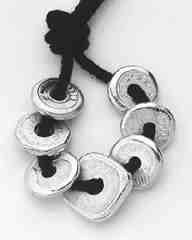
What consists of a tiny pig weighing 18 grams, a half-dozen “doughnuts” and a palm-sized boat dating back to the Han Dynasty in China?
Answer: the gold exhibit on display at the Pacific Mineral Museum in Vancouver, B.C., beginning Nov. 4.
Among the numerous gold artifacts in the $5-million exhibit is a small gold pig issued in 1991 by LD Metals of South Korea. The hog is a symbol of wealth and remains a popular gift item; the 1.2-ounce doughnuts are traditional Chinese coins. The hole enables many bars to be securely stacked together on wooden rods or bound together with string; and the 10-oz. boat was among the treasures of the Han Dynasty (206 BC and 220 AD).
The exhibit will trace the story of gold, from raw ore to pure, processed metal. It will also feature specimens from the earliest discoveries of gold on record, which are currently housed at the Harvard University Museum.
The famous Rothschild gold bar collection, as well as a private collection featuring 40 historic gold coins (including one of the earliest such coins minted), will be on display alongside the Harvard collection.
Another display, titled “Gold in Technology,” is an assortment of gold items in everyday use, and was created by the Washington, D.C.-based Gold Institute. Gold helmets and other items from the National Aeronautics and Space Administration are featured in the exhibit.
Also on display will be gold jewelry, including samples from the Birks Jewellers collection, the Anglogold collection, and the collection belonging to the late William Reid (1920-1988), a former Canadian artist and sculptor. Gold coins from the Royal Canadian Mint and specimens from the Royal Ontario Museum round out the exhibit.
For more information, contact Almira Bardai of the Wilcox Group at (604) 488-1100.
Be the first to comment on "Exhibit traces history of yellow metal"