
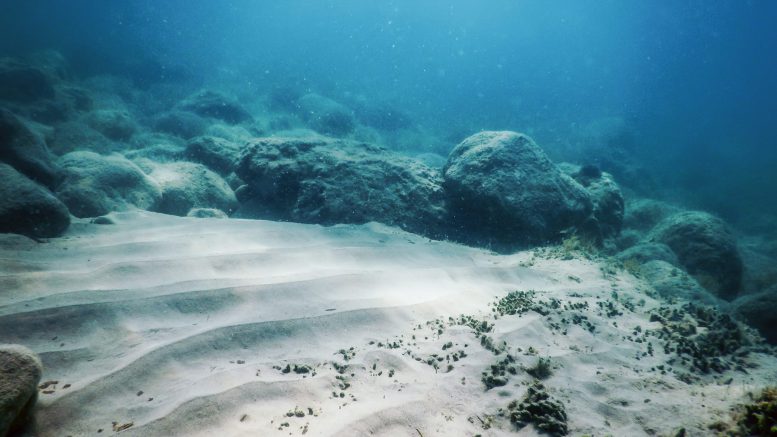
Ocean governance is entering a decisive moment as governments weigh whether to allow deep sea mining in international waters or impose a global moratorium while science and regulations catch up.
The debate is intensifying ahead of a key meeting of the International Seabed Authority (ISA), the United Nations-established body that manages mineral-related activities in the deep sea. Governments will gather in Kingston, Jamaica, from March 9 to 20 to continue negotiations on a proposed mining code that could open the door to commercial seabed mining.
Experts warn that decisions made in the coming months could determine whether the deep ocean remains protected as humanity’s shared heritage or becomes the next frontier of industrial extraction.
At a media and policy briefing Wednesday, Samantha Robb, a senior associate with Ocean Vision Legal, outlined the legal risks of mining outside the ISA system. While the United Nations Convention on the Law of the Sea (UNCLOS) establishes the ISA as the sole authority to regulate mining in seabed areas beyond national jurisdiction, some companies and governments are exploring ways to proceed independently, she said.
Robb pointed to recent developments in the U.S., where a new domestic regulatory pathway created by President Donald Trump could authorize mining in international waters. Such actions would conflict with UNCLOS provisions that designate the deep seabed and its resources as the “common heritage of humankind,” meaning activities must benefit all people, including future generations, she said.
Unilateral mining, she warned, would bypass mechanisms designed to ensure equitable distribution of financial benefits and environmental protections. It could also destabilize international governance structures built on multilateral cooperation.
Restraint
Support for restraint has grown. As of December, about 40 countries were backing a moratorium on deep-seabed mining, citing environmental uncertainty and governance gaps. Scientific studies have added weight to those concerns, including trials showing steep declines in seabed animal abundance and diversity following disturbance. Several governments have slowed or halted plans, with Norway pausing its deep-sea mining ambitions amid domestic and international opposition.
David Willima, the Deep Sea Conservation Coalition’s Africa regional lead, said the deep-sea mining debate also intersects with the new High Seas Treaty, formally known as the BBNJ Agreement on biodiversity beyond national jurisdiction.
The treaty, which entered into force on Jan. 17, aims to strengthen conservation and sustainable use of marine biodiversity in international waters.
Allowing deep sea mining now, Willima said, could undermine the treaty before it is fully implemented. The agreement emphasizes precaution, biodiversity protection and equitable benefit sharing, particularly for developing countries.
“Mining could threaten fragile ecosystems, disrupt food webs and damage habitats that hold valuable marine genetic resources,” he said.
Scientists believe these resources could lead to medical and scientific breakthroughs, yet many of the ecosystems that contain them overlap with areas targeted for mineral extraction, including hydrothermal vents and seamounts, Willima noted.
He also highlighted concerns from African countries about potential economic and environmental impacts. An influx of seabed minerals could oversupply global markets and destabilize terrestrial mining sectors that many developing economies depend on.
Unresolved issues
Emma Wilson, policy lead at the Deep Sea Conservation Coalition, said the ISA faces growing pressure to finalize its mining regulations even though the proposed mining code remains incomplete.
Dozens of key issues remain unresolved, including environmental protections, benefit-sharing rules and the rights of Indigenous peoples, she said.
Wilson also expressed concerns about the ISA secretariat advocating rapid adoption of the mining code in response to unilateral mining threats. Accelerating the process risks weakening governance rather than strengthening it, she said.
A moratorium would not halt negotiations or scientific research, Wilson said, but would give governments time to resolve legal and technical questions while insulating the process from industry pressure.
She added that ISA member states can also limit unilateral mining efforts by denying access to global investment, partnerships and markets for companies attempting to bypass the international regime.
Increased interest
Interest in deep-sea mining has grown over the past two years. Some companies, including U.S. defence giant Lockheed Martin (NYSE: LMT), have resumed Pacific seabed mining plans through a UK subsidiarydespite ongoing regulatory uncertainty.
Deep Sea Minerals Corp. (CSE: SEAS) joined last month the U.S. Defense Industrial Base Consortium (DIBC), a Department of War-backed consortium that connects government, private industry, and academia under a flexible contracting framework to rapidly develop and deliver advanced technologies and strengthen the country’s defence industrial base.
The company also announced this week that it is on track to proceed with its license application in accordance with the National Oceanic and Atmospheric Administration regulatory requirements.
California-based Impossible Metals has already applied for exploration rights both under U.S. law and through the ISA, targeting the Clarion-Clipperton Zone in the Pacific, which holds nodules rich in copper, nickel, manganese and other metals vital for electric vehicles.
Canada’s The Metals Company (NASDAQ: TMCWW) filed for a commercial permit almost a year ago and secured an $85.2 million investment from South Korea’s Korea Zinc in June.The deal positioned Korea Zinc as a non-Chinese alternative capable of refining TMC’s extracted materials into battery-grade metals.


Be the first to comment on "Deep-sea mining debate reaches critical global moment"