
Read the French version: Chasse au trésor : Nelligan insuffle une nouvelle vie à un ancien camp québécois
Watch the Video: English | French
There are places in Canada where you can almost feel the geology beneath your feet.
Chibougamau is one of them.
Drive north into this corner of Quebec and the landscape seems endless: spruce and jack pine, exposed rock, lakes and rivers stretching towards the horizon. But hidden beneath all that Canadian Shield is something that has drawn prospectors, geologists and mining companies here for more than a century.
Copper, gold, silver and zinc built the region.
Chibougamau has already lived one great mining era. From the 1950s onward, mines transformed this remote part of Quebec into one of Canada’s celebrated mining camps. Generations of miners descended underground, communities grew and billions of pounds of metal were pulled from ancient rock.
Today, while many of those historic mines are closed, the mining story is far from finished for the town about 500 km north of Montreal.
Iamgold
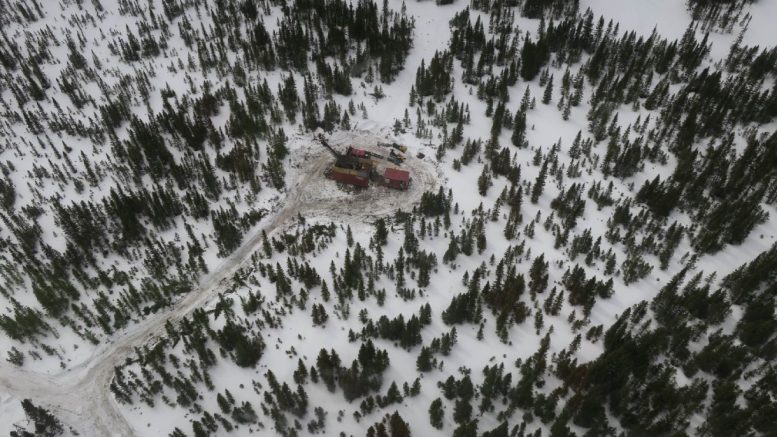
About 45 km south of the Chibougamau-Chapais area, Iamgold (TSX: IMG; NYSE: IAG) is advancing the Nelligan Mining Complex, a 1,340-sq.-km package of deposits and exploration ground.
Rather than developing a single isolated deposit, Iamgold is studying whether several nearby deposits could eventually work together as one mining complex, potentially feeding a central processing plant.
After many decades of searching for individual mines around Chibougamau, the future may lie in thinking bigger, about the entire district.
There is a lesson there for Canada too.
At a time when trade tensions are forcing Canadians to think harder about economic independence and what we can produce here at home, perhaps we need to start thinking bigger about Canada’s mineral wealth as well.
Chibougamau is a good place to start.
Fur trader
The Cree have lived in and travelled through this region for generations, long before there was a town here.
Then came explorers, fur traders and eventually geologists.
In 1870, Geological Survey of Canada geologist James Richardson recorded copper mineralization near Lake Chibougamau.
But it was a fur trader named Peter McKenzie who really got things moving.
McKenzie wasn’t arriving by helicopter with a geological team and a multimillion-dollar exploration budget. He was a fur trader who managed a trading post on the Ashuapmushuan River and knew the country from his work in the wilderness.
In 1903, while exploring around Lake Chibougamau, he found copper mineralization on Portage Island. The following year, Quebec mining inspector Joseph Obalski travelled north to investigate and confirmed the discovery’s significance.
Their work prompted further prospecting around the lake.
Soon, prospectors were searching for gold and other metals. McKenzie’s discovery became so important to the region that a township would eventually bear his name.
There was just one rather significant problem: getting there.
Chibougamau was wilderness, hundreds of kilometres from southern Quebec. There was no convenient highway and certainly no airport shuttle waiting for prospectors. Yet they kept coming.
A 240-km winter road from Langlade station was used by teams of as many as 10 horses to haul mining equipment into the district. Prospectors searched for copper and gold as well as silver, iron, lead and zinc.
By the late 1920s, Chibougamau was drawing renewed interest as a potential new Yukon. Then came the 1929 crash. Credit dried up and much of the boom stopped in its tracks.
But the rocks weren’t going anywhere and neither, fortunately, were the prospectors.
Camp comes alive
Despite tough economic times, the exploration continued and roads eventually pushed north so that by the end of the Second World War Chibougamau’s moment finally arrived.
By the early 1950s, mines were being developed across the Chibougamau-Chapais district as what had been a remote exploration frontier became a mining centre. Workers and their families arrived, and businesses and suppliers followed.
Names such as Campbell Chibougamau, Opemiska and Copper Rand became part of Canadian mining history as the metal began flowing out of the region.
The Chibougamau mining camp has produced an estimated 1.62 billion lb. of copper and 3.22 million oz. of gold, along with substantial quantities of silver and zinc.Nearby Chapais added roughly another 1.1 billion lb. of copper and 800,000 oz.of gold.
Those metals travelled far beyond northern Quebec. Copper became wire, motors, buildings and machinery. Gold entered financial markets, jewelry and industry.
But mining camps have life cycles. Deposits are found and developed, ore is extracted and, eventually, mines close.
By the beginning of the 21st century, Chibougamau’s great first mining era was largely over.
The town remained. So did the roads, power, mining knowledge and contractors. Most important, the rocks remained.
Searching familiar ground
One of the great misconceptions about mineral exploration is that discoveries must be made where nobody has looked before. Often the opposite is true.
New technology, new geological ideas and deeper drilling can allow explorers to see what previous generations missed.
Which brings us to Nelligan. Exploration around the property stretches back to the 1950s, with Falconbridge, SOQUEM and others conducting surveys and drilling over the decades.
They knew there was gold here, but they didn’t fully put the puzzle together.
Beginning in 2012, junior explorer Vanstar Mining took another look. Drilling identified new gold-bearing zones. Iamgold optioned the property in 2014.
Then the drills really started turning. Iamgold acquired Vanstar outright in 2023, giving it full ownership of Nelligan. But that was only one piece of a much larger geological puzzle.
Nearby sat the high-grade Monster Lake deposit. To the northeast was Philibert. Elsewhere were Chevrier, Lac Surprise, Muus and Anik.
Different properties, different owners, but the same mining district.
Then, at the end of 2025, Iamgold put many of the pieces together.
Building something bigger
Iamgold completed its acquisitions of Northern Superior Resources and Mines d’Or Orbec in December 2025.
Northern Superior brought projects including Philibert, Chevrier, Lac Surprise and Croteau. Orbec brought the early-stage Muus project.
Combined with Iamgold’s existing Nelligan, Monster Lake and Anik properties, the acquisitions created something much larger than any individual project.
The Nelligan Mining Complex makes Iamgold the largest landholder in the district.
Even more interesting is how close the major deposits are to one another.
Nelligan, Monster Lake, Philibert and Chevrier sit within a relatively compact area, with the principal deposits within about a 17-km radius.
That creates an intriguing possibility.
Instead of building separate processing plants for individual deposits, Iamgold is studying whether multiple sources of ore could eventually feed one central plant, although it hasn’t yet defined a mine plan or processing route.
Think of several spokes feeding the same hub, though the concept remains preliminary.
Across the complex Iamgold holds 136.5 million indicated tonnes grading 0.99 gram gold per tonne for 4.34 million oz., and 216.2 million inferred tonnes at 1.08 grams gold for 7.51 million ounces.
And there is plenty of ground left to explore.
Iamgold plans to spend about $24 million (C$33.6 million) for exploration at Nelligan this year, drilling its major deposits while searching for more. The company is targeting an inaugural technical report in mid-2027 and says the work will support a conceptual preliminary economic assessment later that year.
That study should begin answering the question that matters most: Could all these discoveries become a major new Canadian mining complex?
More than gold
For Chibougamau, the answer matters enormously.
A new generation of mines could bring long-term jobs, contracting opportunities, infrastructure investment and business activity to a historic mining centre.
And unlike a remote greenfield discovery, Chibougamau already has something many emerging mining districts spend decades trying to create: mining knowledge.
There are experienced workers, contractors and suppliers, along with roads and power. Any development would still require environmental review, permitting and consultation with affected Indigenous communities, whose participation and partnership will be essential to determining how work proceeds.
None of this means Nelligan automatically becomes a mine. There is still much engineering, environmental work, permitting and consultation that lies ahead.
But this is how mining districts are reborn. First comes an idea, then a drill hole, then another, until eventually, enough discoveries can change how people think about an entire region.
Nelligan’s importance
And right now, Canada needs more of these stories.
Trade tensions with the United States have exposed the danger of relying too heavily on any single market. Economic sovereignty, secure supply chains and our ability to build major projects at home have suddenly become kitchen-table issues.
Mining sits directly in the middle of that conversation.
Canada’s minerals sector exported C$162 billion of mineral and metal products in 2025, representing 23% of the country’s merchandise exports.
Gold alone accounted for about $53 billion, making it Canada’s second-largest commodity export after crude oil.
That matters when tariffs and shifting trade relationships are disrupting other parts of the Canadian economy.
But there is an obvious catch.
You can’t export tomorrow’s gold unless you discover tomorrow’s mines.
Canada’s famous mining camps were built from discoveries made decades ago. If we want mining to continue supporting communities, Indigenous economic development, government revenues and our economic independence, we need to keep finding deposits.
More importantly, we need to turn some of them into mines.
That makes districts such as Chibougamau strategically important again.
Chibougamau’s second act
More than a century ago, Peter McKenzie travelled through these forests trading furs and looking at rocks.
His discoveries helped bring prospectors north. They hauled mining equipment through the wilderness behind teams of horses, survived busts and booms and kept searching until mines finally transformed the region.
Billions of pounds of copper and millions of ounces of gold eventually emerged from these rocks.
Then the great mines grew quiet, but the searching never really stopped.
Today, rigs are once again drilling through the forests south of Chibougamau. This time, explorers have technology Peter McKenzie could scarcely have imagined.
And instead of chasing one mineral showing beside a lake, they are beginning to see an entire district: Nelligan, Monster Lake, Philibert, Chevrier and surrounding targets.
Different discoveries, made at different times by different people, now being assembled into one enormous geological puzzle. If the project is successfully developed it would have the potential to be among the largest gold mines in Canada.
A project of this size could generate billions of dollars in regional economic activity and thousands of direct and indirect jobs, drawing in contractors, suppliers and service businesses that would grow alongside it. Mines of this scale are generational, and that economic base would be sustained for decades rather than years.
Whether Iamgold succeeds in turning that puzzle into Chibougamau’s next great mining complex remains to be seen.
But uncertainty has always been part of exploration.
Generations after Peter McKenzie went searching for mineral riches among these lakes and forests, prospectors are searching here again.
And somewhere out there, so are you.
(1, 13) • (10, 4) • (25, 1) • (36, 3) • (45, 1) • (55, 13) • (63, 1) • (66, 21) • (77, 32)
This article was prepared by The Northern Miner and does not constitute disclosure by Iamgold Corp. (“Iamgold”), which has not endorsed or approved its contents. It contains forward-looking statements regarding the potential development, scale and economic impact of the Nelligan Mining Complex, which are subject to risks and uncertainties — including exploration results, study outcomes, permitting and gold prices — and may prove incorrect. There is no certainty the complex will be developed.
The complex is at the resource development stage. Mineral resources are not mineral reserves and do not have demonstrated economic viability. No mineral reserves have been declared and no economic study has been completed. Inferred mineral resources are subject to a high degree of uncertainty and may not be upgraded to a higher category.Readers should refer to Iamgold’s disclosure filed on SEDAR+ at www.sedarplus.ca.
Be the first to comment on "Treasure Hunt: Nelligan revives an old Quebec camp"