
Vale‘s (NYSE: VALE) base metals business could generate more than one-third of the Brazilian mining group’s pretax profit over the coming decade as production climbs and efficiencies kick in, executives said.
Metals such as nickel and copper are on track to contribute about 26% of Vale’s earnings before interest, taxes, depreciation and amortization (EBITDA) this year, up from 10% in 2024, and the unit has the potential to get to 30-35% in the long run, chief financial officer Marcelo Bacci said Tuesday. By comparison, copper’s share of profit in the most recent quarters was 30% at Rio Tinto (ASX, LSE, NYSE: RIO) and 51% at BHP (ASX, NYSE, LSE: BHP).
Vale, the world’s biggest iron ore miner, carved out its base metals unit in 2024 to allow the business to grow faster, selling a 10% stake in Vale Base Metals (VBM) to Saudi Arabia’s Manara Minerals for about $2.5 billion in the process. Group CEO Gustavo Pimenta said earlier this month the company is targeting a doubling of copper output over the next decade as part of a plan to expand its footprint in three main commodities.
The base metals business “is already very relevant, and it’s going to become more and more relevant over time for Vale,” Bacci said in Toronto during an investor presentation aimed at shining a light on the unit.
Demand boom
Like other global miners, Vale is racing to meet an expected surge in demand for critical metals amid increased electrification and a projected boom in data-centre construction. Global demand for nickel may rise 42% in the next decade, powered by applications such as aerospace, alloys and batteries, chief commercial officer Tina Gauthier said.
Vale’s goal is to produce 700,000 tonnes of copper by 2035, up from 382,000 tonnes in 2025, Chris McCleave, VBM’s chief technical officer, said Tuesday. Output should slow to between 350,000 tonnes and 380,000 this year due to “significant” plant shutdowns before rebounding, he said.
“We see a robust pathway to additional production over the next decade,” he said.
Continued exploration success in Brazil and Canada could even allow Vale to exceed its long-term output target, McCleave said. Aspirations to go beyond 700,000 tonnes of copper are “credible,” he said.
Sudbury JV
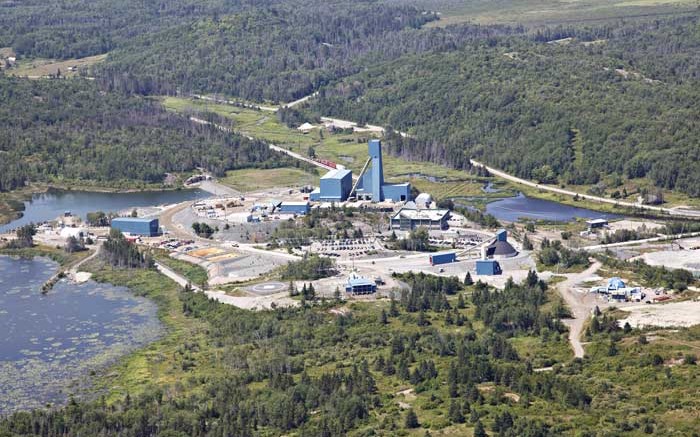
Canada will play a key role in Vale’s ambitions. VBM and Glencore (LSE: GLEN) agreed in December to jointly evaluate a potential brownfield copper development project at their adjacent properties in the Sudbury basin. The companies will explore the “significant synergies” of mining both companies’ underground deposits via the existing shaft and infrastructure at Glencore’s Nickel Rim South mine.
Study results show a joint venture could unlock 50,000 tonnes per year of additional copper production and a 20-year mine life, in addition to nickel, gold, platinum and palladium content, McCleave said.
VBM is also conducting capacity expansion studies in Sudbury and Voisey’s Bay, Nfld., he said without providing specifics.
Other priorities for 2026 include copper growth through near–mine extensions, satellite deposits and down–plunge continuity, Vale said Monday. Drilling activity in Brazil’s Carajás region will double to more than 120,000 metres.
Reserve growth
Rising reserves are a key part of the story. VBM said Monday it’s targeting 20% growth in its Canadian and Brazilian mineral reserves and resources between 2024 and the end of 2027.
Total copper reserves and resources rose 6% last year to 53 million tonnes as of Dec. 31, while nickel reserves and resources climbed 13% to 14 million tonnes, Vale said. Current copper resources support more than 65 years of potential production at existing rates, the company said.
These increases, along with others for metals such as cobalt, platinum, palladium and gold, will “significantly strengthen” the company’s organic growth pipeline, according to the company.
Nickel output
In nickel, VBM is targeting annual output of between 210,000 and 250,000 tonnes by 2030. That’s up from about 177,000 tonnes last year. Vale is the Western hemisphere’s largest producer of nickel.
Iron ore output is also forecast to expand, albeit at a slower rate.
Vale produces between 235 million and 245 million tonnes of iron ore annually, and its goal is to reach 360 million tonnes over time, Bacci said Tuesday.
“Iron ore is a huge market with low growth,” Bacci said. “The growth comes from VBM.”
Rising profits
Earnings before interest, taxes, depreciation and amortization at VBM more than doubled to $3.3 billion in 2025 from $1.3 billion a year earlier, thanks to higher volumes and productivity gains.
Financial analysts who track Vale expect EBITDA at the base metals unit to range between $3.7 billion and $5.5 billion this year.
VBM will generate between $400 million and $1.9 billion of cash flow this year, depending on commodity prices, said Murilo Muller, the unit’s chief financial officer.
Base metals have traditionally been a laggard among Vale’s main businesses. VBM CEO Shaun Usmar, who joined in October 2024, acknowledged that history of underperformance and the need to hit profit targets.
“We have to start delivering on our quarterly performance and annual performance,” he said Tuesday. “This business hadn’t hit guidance in a decade. We have to get that right first.”



Be the first to comment on "Canada key as Vale plans base metals profit surge"