
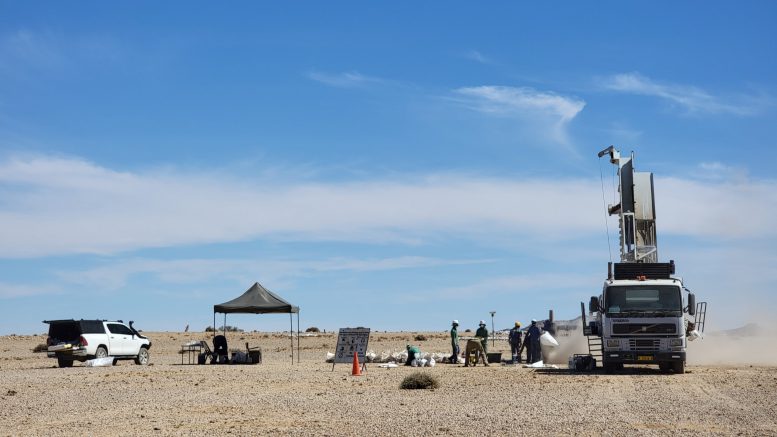
ReeXploration (TSXV: REE) is preparing a first‑pass drill program at its Eureka project in central Namibia to test a newly mapped uranium system while advancing an existing rare earths resource that has cleared early metallurgical hurdles.
The Halifax, Nova Scotia-based company’s target sits along “Alaskite Alley,” in Namibia’s Erongo Mining District, the structural corridor that hosts Namibia’s Rössing and Husab uranium deposits roughly 350 km west of Windhoek.
“We are early, but multiple key geological ingredients are present, which is why this target is now a near-term priority for drilling,” interim CEO Chris Drysdale said.
Namibia’s uranium belt is considered one of the world’s most-studied alaskite provinces. Eureka’s footprint checks several boxes shared by the big deposits: proximity to the Welwitschia Lineament, a position along the flanks of a basement dome and uranium‑bearing leucogranites intruding reactive calc‑silicate host rocks. That geologic recipe, together with the coherent early-stage exploration radiometric signature, elevates the area to a drill‑ready prospect.
ReeXploration’s Toronto-listed shares have surged over the past 12 months to 19¢ apiece. The company has a market capitalization of $24 million.
Uranium rich
Airborne radiometrics define a 6.5 km by 3.5 km uranium‑high, thorium‑low anomaly immediately southwest of the Eureka Dome. Field checks returned ground spectrometer readings up to 1,500 counts per second over gypcrete and calcrete horizons and identified secondary uranium minerals in weathered leucogranites. Portable X-ray fluorescence values reach 853 parts per million uranium.
The company interprets the near‑surface expression as leakage from a deeper alaskite‑hosted system typical of the corridor, Drysdale said.
Drilling will focus on testing below the weathered horizon and tying surface readings to grade and geometry at depth.
“The immediate next step is a focused drill program designed to test below the weathered horizon and determine the continuity, grade and geometry of the uranium mineralization at depth,” Drysdale said. “Drilling will allow us to validate whether these surface expressions link into a larger alaskite‑hosted system.”
The company plans to keep mapping, sampling and running targeted geophysics to refine collar placement as results come in. Depending on first‑round outcomes, results will clarify the scale and continuity of the uranium system and inform future exploration programs,” Drysdale said.
ReeXploration hasn’t disclosed a program budget or planned metres yet. It raised $1 million (US$737,500) in December by issuing 9 million shares at 11¢ apiece.
Rare earths
While uranium is the near‑term catalyst, Eureka already carries a rare earths platform. The licences (EPLs 6762 and 8748) host an NI 43‑101-compliant inferred resource of 310,000 tonnes grading 4.8% total rare earth oxides, including 0.7% neodymium‑praseodymium.
More than half the value sits in magnet metals, Drysdale said. Early bench tests at consulting engineering firm SGS produced a clean monazite concentrate of about 60% total rare earths oxides at roughly 65% recovery using gravity and magnetic separation, with low radionuclides. Those parameters are considered supportive of a potentially simple, low-impact flowsheet in a commodity where concentrate and product quality often determines what gets financed.
The rare earths system spans a 13 km by 6 km dome with many near‑surface mineralized zones. Work to date has included four rounds of drilling and extensive trenching; 18 of 19 trenches hit mineralization. Follow‑up drilling is planned to extend known zones and support resource growth, according to Drysdale.
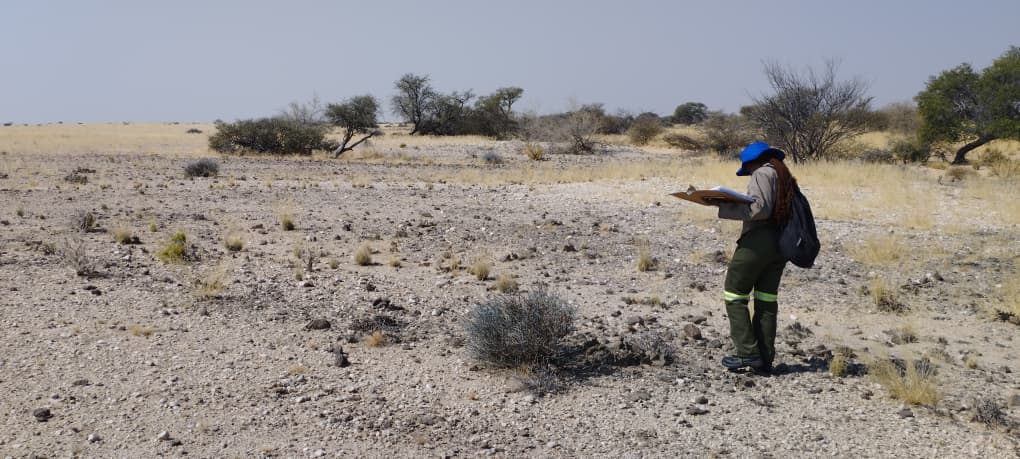
Drilling will focus on testing below the weathered horizon and tying surface readings to grade and geometry at depth. Credit: ReeXploration
Dual‑commodity pitch
ReeXploration’s minerals mix provides optionality on partners, funding and offtake as each component advances.
“Having rare earths and uranium on the same project creates strategic depth that is unique at this stage of exploration,” Drysdale said. “For investors, that means exposure to magnet metals that enable electrification and to uranium at a time when nuclear demand is accelerating globally.”
The setting is backed by infrastructure and permits. Eureka lies about 2 km from the Trans‑Kalahari Highway with rail, power and deep‑water port access. Environmental clearance certificates for exploration are in place and the project’s low‑radioactivity monazite mineralogy can simplify approvals.
These advantages fit with Namibia’s reputation as a stable, mining‑friendly jurisdiction with transparent regulation and a long track record in uranium and diamonds.
Next steps and risks
ReeXploration describes the uranium target as a strategic addition that complements its “metallurgy‑first” rare earths base. The company’s model is to advance discoveries through technical de‑risking and early development, then position for partnerships rather than capital‑heavy builds, Drysdale said.
That approach has become more common among juniors seeking traction in critical minerals without diluting heavily or taking on construction risk.
As with any early uranium story, the key tests lie in the core. The strongest numbers so far are field spectrometer counts and portable XRF readings. XRF values are semiquantitative and do not substitute for assays; counts‑per‑second measurements indicate radioactivity, not grade. The first drill holes will have to show continuity, geometry and grade that match the radiometric footprint and surface indicators.
Initial holes will target the most coherent radiometric and geochemical anomalies to prove the link between surface and depth.
“We will also conduct follow‑up sampling, detailed mapping and targeted geophysics to refine drill placement as results come in,” Drysdale said. “Depending on what the first round of drilling reveals, we anticipate being able to define a clearer resource path within the next several quarters.”
The preceding Joint Venture video is PROMOTED CONTENT sponsored by ReeXploration and produced in co-operation with The Northern Miner. Visit https://rareearthexploration.com for more information.
Be the first to comment on "JV article: ReeXploration plans first drill at Namibia’s Eureka target"