
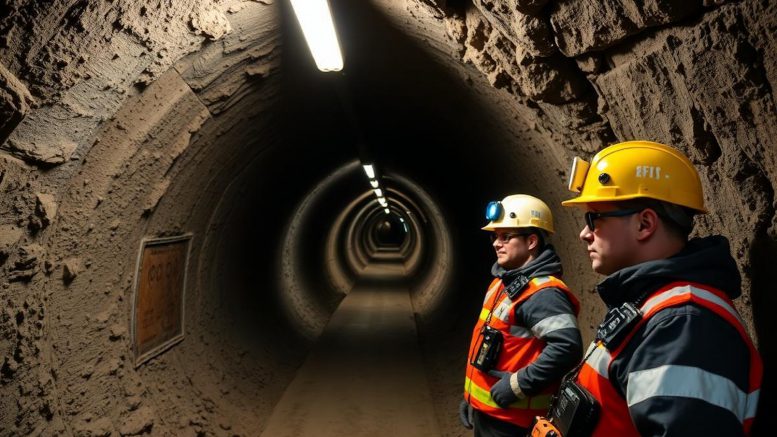
Remote mining projects often face long delays and high costs to establish reliable ground communications. They should look to the sky instead, according to MTN, a global satellite communications provider with decades of experience in the maritime and energy sectors.
The mining space globally loses about $15 billion (C$20.7 billion) a year of profit due to connectivity downtime, MTN says. Network failures can cost as much as $130,000 per hour, a cost that many operators now factor into project budgets. The result is idle machinery, stalled workforces and mounting administrative backlogs.
“That cost is absolutely insane,” said Kelly Dennehy, vice-president of enterprise for the Americas at MTN. “Remote operations can’t function without a consistent connection.”
Beyond financial losses, patchy networks create safety blind spots, putting workers and equipment at greater risk on fast-moving, remote sites. Satellite systems are emerging as an alternative to fiber wires or cell towers, bringing sites online within hours and providing steady connections that reduce downtime and keep automation and remote operations running. MTN adapts systems proven on volatile offshore rigs and in busy shipping lanes to keep mine sites connected.
Connectivity gap
Reliable connectivity remains elusive in the mining industry: only 16% of mine operators report consistently dependable on-site internet, according to a survey by U.K.-based satellite provider Inmarsat. That leaves most projects vulnerable to service gaps that slow production, delay reporting, and heighten safety risks in already challenging operating environments.
While remote connectivity has long been a sticking point for miners, operators are looking to solutions that can bring sites online quickly without waiting months for traditional infrastructure.
“Our expertise has really been internet connectivity formatted to support a large inventory of sites that are always moving and always changing,” Dennehy said. “All of our support mechanisms have been built around that rapid deployment and being able to get the most out of your connectivity.”
For the mining sector, staying connected has typically meant spending millions on running fiber to the site, navigating permitting for a new cell tower, or installing an expensive satellite dish – often with no assurance of uninterrupted speeds.
However, satellite technology is changing how operators manage remote projects.
Dennehy said with a portable satellite connection, a mine site with 30 to 100 people could install three high-performance terminals enabled by systems such as Starlink for roughly $6,000, pay a fractional amount of money for that service, and have near fiber levels of speed.
“When that is all done, you can pack it all up in about four hours and take it to your next site with you,” he said. “You have zero loss on that equipment.”
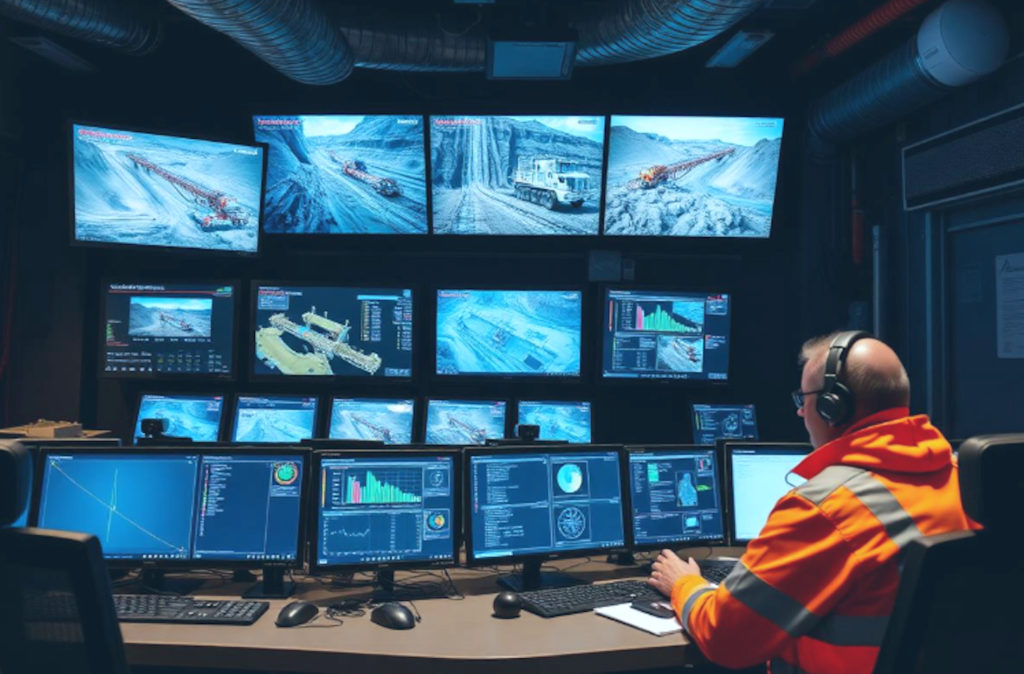
However, satellite technology is changing how operators manage remote projects. Image supplied.
Safety on the line
Connectivity gaps don’t just cost money – they also carry safety implications. In remote projects where conditions are already harsh and emergency response times are long, losing contact can impact worker safety and slow down incident response.
By maintaining near-constant connectivity, MTN’s satellite links ensure critical safety systems, sensors, and automated machinery remain online, reducing the risk of accidents and operational shutdowns at remote mine sites, Dennehy said.
“With heavy industries, safety needs to be king – You need the ability to reach emergency services 24 hours a day and crystal-clear communications if there is an accident.”
MTN has developed a portable satellite link solution for small teams working in the field. The tool combines Starlink mini technology with a case that can switch between battery and solar power.
“You can take that briefcase in the back of a pickup truck out in the middle of nowhere, open that case up, flip one switch, and there is high-speed internet for up to six people to connect with about eight hours of battery life,” he said. “When you’re done, you flip it off, fold it all up.”
Advancing the industry
Mining companies are ramping up investment in internet-of-things (IoT) technologies, with London-based analytics firm GlobalData forecasting sector spending to climb to $8.2 billion in 2027 from $5.8 billion this year.
“What does increased data consumption mean? It means more accountability. It means more IoT. It means that all of your equipment and all of your personnel are working in unison to be more efficient,” Dennehy said.
However, connectivity shortfalls are quickly becoming one of the biggest barriers to realizing the efficiencies modern mining technology promises. Data from Boston Consulting Group’s 2021 Digital Acceleration Index shows the metals and mining sector is 30% to 40% less digitally mature than comparable industries such as the automotive or chemical sectors.
These digital gaps aren’t just a minor inconvenience – they compound as operators adopt more advanced tools, Dennehy said. With autonomous fleets, remote operations centers, and digital twins coming online, the cost of connectivity blind spots is only set to grow.
“You need the ability to turn a terminal on and have broadband-level speeds in the middle of nowhere,” Dennehy said. “Anything less, and your digital tools don’t deliver.”
Be the first to comment on "JV article: MTN beams satellite-enabled efficiency and safety"