
Australia’s PLS (ASX: PLS), formerly Pilbara Minerals, has increased the resource at its Pilgangoora lithium operation in Western Australia by nearly a quarter through gains in tonnage and grade, overtaking nearby China-held Greenbushes as the world’s largest hard rock lithium deposit.
The measured and indicated resource now stands at 446 million tonnes grading 1.28% lithium oxide, up from 413.8 million tonnes at 1.15% in August 2023, according to the company’s June 11 update.
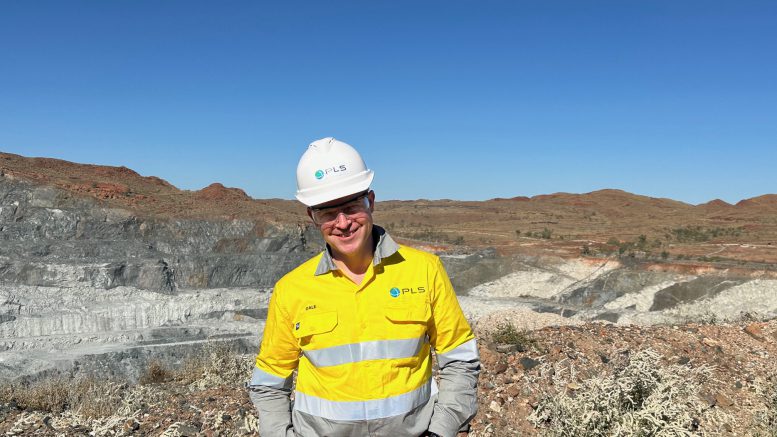
“Pilgangoora shot the lights out in the June quarter,” Managing Director Dale Henderson said during a site visit last week, pointing to a 77% jump in production to 221,300 tonnes of spodumene and a 10% drop in unit costs to $397 per tonne (A$614). “Fiscal year 2026 is very much the year of steady state for the platform and improving what it can do.”
The upgrade and record output underscore PLS’s strategy of expanding Pilgangoora into a long-life, low-cost operation capable of withstanding market cycles. Management says operational tweaks, coupled with downstream processing initiatives and international partnerships, will position the company to capture more value from the lithium supply chain as demand for electric vehicles and energy storage continues to grow.
Shares in PLS have gained nearly 18% over the past month to close at A$1.70 apiece in Sydney on Tuesday, valuing the company at A$5.47 billion (US$3.54 billion). They’ve traded in a 52-week range of A$1.07 to A$3.40.
Beat guidance
Pilgangoora, 140 km south of Port Hedland on Australia’s north coast, produced 755,000 tonnes of spodumene concentrate in the year to June 30, beating the top end of guidance of 740,000 tonnes. The company ended the year with A$1 billion in cash and a cash margin from operations of A$192 million.
For fiscal 2026, PLS has forecast 820,000 to 870,000 tonnes of spodumene at costs of A$560 to A$600 per tonne. Ore-sorting technology will be key to keeping recoveries above 70%, Chief Operating Officer Brett McFadgen said during the visit.
“If you don’t have an ore-sorter, you’re not in the game,” he said. “Our recoveries start with a seven – others’ start with a five or six.”
PLS paused work on its mid-stream demonstration plant at Pilgangoora last year due to market conditions, but resumed construction in February after receiving a A$15-million grant from the Western Australian government. The plant, being developed with Calix (ASX: CXL), is designed to produce a higher-value, lithium-enriched product and is due for completion in the quarter to Dec. 31.
The project “is part of our strategy to become more deeply integrated in the battery material supply chain,” Henderson said.
South Korea
The company also holds an 18% stake in POSCO, a South Korean steelmaker and battery materials producer with a 43,000-tonne-per-year lithium hydroxide facility in Gwangyang. It sold 3,070 tonnes of battery-grade product in the quarter to June 30 from the first production train. Certification of output from the second train is underway.
PLS’s smaller Ngungaju plant remains on care and maintenance but can be restarted within four months if prices improve. Henderson said the company was not concerned about other idle capacity in the global sector, predicting that “larger, lower-cost producers” would dominate supply as the industry matures.
“We are not surprised to be going through a low part of the cycle, given the strong highs we had in ’22, so for us, it’s just more a case of sticking to our strategy, looking through this part of the cycle to what we think will ultimately be some strong price appreciation in the future, but it’s incredibly difficult to forecast when that might be.”
Double capacity
In the medium term, PLS is advancing a feasibility study on its P2000 expansion, which could double Pilgangoora’s capacity to 2 million tonnes per year. Completion of the study has been pushed back to fiscal 2027.
The company is also working on development studies for the Colina hard rock lithium project in Brazil, acquired through its $369 million purchase of Latin Resources earlier this year, with results expected in the June 2026 quarter.
The acquisition “gives us exposure to another world-class lithium province” and “positions PLS for long-term growth well beyond Pilgangoora,” Henderson said.
“At the end of the day, this is a strong growth market for lithium, and ultimately, as the industry grows, we expect the volatility to settle out and for the larger, lower cost producers to occupy the main part of the supply chain, i.e. groups like PLS.”

Be the first to comment on "Site visit: PLS now runs world’s biggest hard-rock lithium resource"